

-
"The liturgical year is not an idle discipline, not a sentimentalist's definition of piety, not an historical anachronism. It is Jesus with us, for us, and in us as we strive to make His life our own. It is goad and guide to the kind of personal spirituality that is worthy of the Jesus whose commitment to the Word of God led Him all the way to the cross and beyond it - to Resurrection. It is, without a doubt, learning to live the liturgical year that makes a difference to every other year of our lives."
(Joan Chittister, The Liturgical Year)
-
Showing posts with label quotations. Show all posts
Showing posts with label quotations. Show all posts
Sunday, January 2, 2011

Sunday, November 28, 2010
set us free
-
"Well do I know that
it's not our ambitions, dreams,
desires; hard, hard work
or inner fires that set us free:
it's whatever that He wants."
(Olivia Meldrum)
-
"Well do I know that
it's not our ambitions, dreams,
desires; hard, hard work
or inner fires that set us free:
it's whatever that He wants."
(Olivia Meldrum)
-
Monday, November 1, 2010
a losing position
-
Starting today, I hope to be back to regular posting. It was one of my goals for the year to post more often - mostly because I enjoy it, but also because it is good practice for writing and helps me stay focused and intentional regarding my larger life goals - so I plan to try and get back into the habit, as best as stressful college life allows me.
Today, though, I simply want to share this quote, which I reread tonight. I had underlined this paragraph when I read Wirzba's book earlier this year, and as I picked up the book again tonight and flipped through its pages, I found much needed grace in these words again.
"We are too much social climbers, angling and jockeying for position within an ever-changing hierarchy of prestige. We continually compare ourselves with others, seeing who is more successful or popular or beautiful. This is a losing position to be in, since there will always be somebody who compares better in some area. It is also theologically naive, because it assumes that God sees us in a similar hierarchical manner. When we recognize that we are all sinners, there is no cause for boasting and no need for competitive comparisons. In God's household all members are equally important."
(Norman Wirzba, Living the Sabbath, pg. 60)
under mercy,
Jessina
-
Starting today, I hope to be back to regular posting. It was one of my goals for the year to post more often - mostly because I enjoy it, but also because it is good practice for writing and helps me stay focused and intentional regarding my larger life goals - so I plan to try and get back into the habit, as best as stressful college life allows me.
Today, though, I simply want to share this quote, which I reread tonight. I had underlined this paragraph when I read Wirzba's book earlier this year, and as I picked up the book again tonight and flipped through its pages, I found much needed grace in these words again.
"We are too much social climbers, angling and jockeying for position within an ever-changing hierarchy of prestige. We continually compare ourselves with others, seeing who is more successful or popular or beautiful. This is a losing position to be in, since there will always be somebody who compares better in some area. It is also theologically naive, because it assumes that God sees us in a similar hierarchical manner. When we recognize that we are all sinners, there is no cause for boasting and no need for competitive comparisons. In God's household all members are equally important."
(Norman Wirzba, Living the Sabbath, pg. 60)
under mercy,
Jessina
-
Friday, July 23, 2010
an alphabet of grace
-
"Both life and death are present for me in the house this summer. I look at Mother, and think that if I am to reflect on the eventual death of her body, of all bodies, in a way that is not destructive, I must never lose sight of those other deaths which precede the final, physical death, the deaths over which we have some freedom; the death of self-will, self-indulgence, self-deception, all those self-devices which, instead of making us more fully alive, make us less." (Madeline L'Engle, The Summer of the Great Grandmother, 53)
"The times I have been most fully me are when I have been wholly involved in someone or something else; when I am listening, rather than talking; cooking a special, festive dinner; struggling with a fugue at the piano; putting a baby to bed; writing. A long-dead philosopher said that if we practice dying enough during our lives we will hardly notice the moment of transition when the actual time comes. But I am far from a saint, and I am seldom able to practice consciously this kind of dying; it is not a do-it-yourself activity. I know about it only after it has happened, and I am only now beginning to recognize it for what it is." (Madeline L'Engle, The Summer of the Great Grandmother, 53)
"Did Mado ever have the sudden, intemperate rages which sometimes hit me, and which are produced by what seems completely inadequate causes? She surely had reason for rage and resentment, and yet these are qualities which are never mentioned in regard to her. If they were there, she kept them to herself, and healed them in her own way, with prayer. I have her battered Bible, which Mother had rebound for me. It was much read, much marked, and there are stains which came, I think, through private tears. Perhaps through it she will teach me an alphabet of grace. She had that spontaneous quality of aliveness which illuminates people who have already done a lot of their dying, and I think I am beginning to understand the truth of that." (Madeline L'Engle, The Summer of the Great-Grandmother, 179-180)
-
trying again, by grace,
Jessina
-
"Both life and death are present for me in the house this summer. I look at Mother, and think that if I am to reflect on the eventual death of her body, of all bodies, in a way that is not destructive, I must never lose sight of those other deaths which precede the final, physical death, the deaths over which we have some freedom; the death of self-will, self-indulgence, self-deception, all those self-devices which, instead of making us more fully alive, make us less." (Madeline L'Engle, The Summer of the Great Grandmother, 53)
"The times I have been most fully me are when I have been wholly involved in someone or something else; when I am listening, rather than talking; cooking a special, festive dinner; struggling with a fugue at the piano; putting a baby to bed; writing. A long-dead philosopher said that if we practice dying enough during our lives we will hardly notice the moment of transition when the actual time comes. But I am far from a saint, and I am seldom able to practice consciously this kind of dying; it is not a do-it-yourself activity. I know about it only after it has happened, and I am only now beginning to recognize it for what it is." (Madeline L'Engle, The Summer of the Great Grandmother, 53)
"Did Mado ever have the sudden, intemperate rages which sometimes hit me, and which are produced by what seems completely inadequate causes? She surely had reason for rage and resentment, and yet these are qualities which are never mentioned in regard to her. If they were there, she kept them to herself, and healed them in her own way, with prayer. I have her battered Bible, which Mother had rebound for me. It was much read, much marked, and there are stains which came, I think, through private tears. Perhaps through it she will teach me an alphabet of grace. She had that spontaneous quality of aliveness which illuminates people who have already done a lot of their dying, and I think I am beginning to understand the truth of that." (Madeline L'Engle, The Summer of the Great-Grandmother, 179-180)
-
trying again, by grace,
Jessina
-
Wednesday, June 23, 2010
beauty & wisdom
-
"Plato once remarked that if wisdom were visible, the whole world would fall madly in love with it. Although wisdom is not visible, beauty is. And this is why, for Plato and many other philosophers, in loving beauty, people are moving in the direction of wisdom. The important implication here is that we human beings simply cannot do without beauty . . . If beauty will save the world, it is because beauty presupposes love and points in the direction of wisdom." (Donald DeMarco) Read more here.
-
"The books or the music in which we thought the beauty was located will betray us if we trust them; it was not in them, it only came through them, and what came through them was longing. These things--the beauty, the memory of our own past--are good images of what we really desire; but if they are mistaken for the thing itself, they turn into dumb idols, breaking the hearts of their worshippers. For they are not the thing itself; they are only the scent of the a flower we have not found, the echo of a tune we have not heard, news from a country we have never yet visited." (C.S. Lewis)
-
Thinking about the difference between an ascetic life and a life intentionally surrounded by beauty. So often the gospels seem to encourage a life of an asceticism, of giving up everything, of stark plainness. But then--how does this seemingly innate longing for beauty fit in? And I always come back to the woman with the expensive perfume. And these words of his: "She has done a beautiful thing to me . . . " (But then there are his words to the Rich Young Man.)
-
Considering G.M. Hopkins' struggles between his monastic life as a priest and his work as a poet, I think I might have more in common with him than just a birth date.
-
whispered prayers,
Jessina
-
"Plato once remarked that if wisdom were visible, the whole world would fall madly in love with it. Although wisdom is not visible, beauty is. And this is why, for Plato and many other philosophers, in loving beauty, people are moving in the direction of wisdom. The important implication here is that we human beings simply cannot do without beauty . . . If beauty will save the world, it is because beauty presupposes love and points in the direction of wisdom." (Donald DeMarco) Read more here.
-
"The books or the music in which we thought the beauty was located will betray us if we trust them; it was not in them, it only came through them, and what came through them was longing. These things--the beauty, the memory of our own past--are good images of what we really desire; but if they are mistaken for the thing itself, they turn into dumb idols, breaking the hearts of their worshippers. For they are not the thing itself; they are only the scent of the a flower we have not found, the echo of a tune we have not heard, news from a country we have never yet visited." (C.S. Lewis)
-
Thinking about the difference between an ascetic life and a life intentionally surrounded by beauty. So often the gospels seem to encourage a life of an asceticism, of giving up everything, of stark plainness. But then--how does this seemingly innate longing for beauty fit in? And I always come back to the woman with the expensive perfume. And these words of his: "She has done a beautiful thing to me . . . " (But then there are his words to the Rich Young Man.)
-
Considering G.M. Hopkins' struggles between his monastic life as a priest and his work as a poet, I think I might have more in common with him than just a birth date.
-
whispered prayers,
Jessina
-
Friday, May 21, 2010
an emperor for a minute
-
-

-
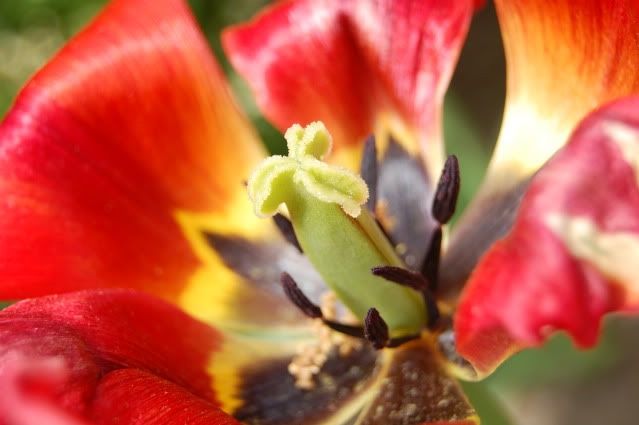
Next time what I'd do is look at
the earth before saying anything. I'd stop
just before going into a house
and be an emperor for a minute
and listen better to the wind
or to the air being still.
-
When anyone talked to me, whether
blame or praise or just passing time,
I'd watch the face, how the mouth
has to work, and see any strain, any
sign of what lifted the voice.
-
And for all, I'd know more -- the earth
bracing itself and soaring, the air
finding every leaf and feather over
forest and water, and for every person
the body glowing inside the clothes
like a light.
-the earth before saying anything. I'd stop
just before going into a house
and be an emperor for a minute
and listen better to the wind
or to the air being still.
-
When anyone talked to me, whether
blame or praise or just passing time,
I'd watch the face, how the mouth
has to work, and see any strain, any
sign of what lifted the voice.
-
And for all, I'd know more -- the earth
bracing itself and soaring, the air
finding every leaf and feather over
forest and water, and for every person
the body glowing inside the clothes
like a light.
Mary Oliver
-
-
Friday, April 2, 2010
ancient and obdurate oaks
-
This week has found me sick. Shamefully: I am not very pain tolerant, at all. When I am sick, I find it difficult to pray, difficult to be kind, difficult to be diligent. And in all honesty, it has just been a measly little cold. Just a snuffy nose, a headache, and a cough.
-
Last summer I came across this quote from Virginia Woolf's On Being Ill and found her description of sickness, if not her conclusion about literature, so decisively true:
-
"Considering how common illness is, how tremendous the spiritual change that it brings, how astonishing, when the lights of health go down, the undiscovered countries that are then disclosed, what wastes and deserts of the soul a slight attack of influenza brings to view, what precipices and lawns sprinkled with bright flowers a little rise of temperature reveals, what ancient and obdurate oaks are uprooted in us by the act of sickness, how we go down into the pit of death and feel the waters of annihilation close above our heads and wake thinking to find ourselves in the presence of the angels and the harpers when we have a tooth out and come to the surface in the dentist's arm-chair and confuse his 'Rinse the mouth-rinse the mouth' with the greeting of the Deity stooping from the floor of Heaven to welcome us--when we think of this, as we are so frequently forced to think of it, it becomes strange indeed that illness has not taken its place with love and battle and jealousy among the prime themes of literature."
-
Sickness seems to be the appointed school of sanctification for me.
-
In other thoughts:
-
+ A headline today: "One of the Moscow subway bombers was a 17 year old widow." My age.
+ I think the Maundy Thursday service and liturgy just might be my favorite of all (so far).
+ My mantra this week: "Communion fills the empty spaces, not consumption."
+ I can endure one more month.
+ ". . . you have brought us out of error into truth, out of sin into righteousness, out of death into life."
-
Forsaken, that we might not be forsaken.
-
in somber silence,
Jessina
-
This week has found me sick. Shamefully: I am not very pain tolerant, at all. When I am sick, I find it difficult to pray, difficult to be kind, difficult to be diligent. And in all honesty, it has just been a measly little cold. Just a snuffy nose, a headache, and a cough.
-
Last summer I came across this quote from Virginia Woolf's On Being Ill and found her description of sickness, if not her conclusion about literature, so decisively true:
-
"Considering how common illness is, how tremendous the spiritual change that it brings, how astonishing, when the lights of health go down, the undiscovered countries that are then disclosed, what wastes and deserts of the soul a slight attack of influenza brings to view, what precipices and lawns sprinkled with bright flowers a little rise of temperature reveals, what ancient and obdurate oaks are uprooted in us by the act of sickness, how we go down into the pit of death and feel the waters of annihilation close above our heads and wake thinking to find ourselves in the presence of the angels and the harpers when we have a tooth out and come to the surface in the dentist's arm-chair and confuse his 'Rinse the mouth-rinse the mouth' with the greeting of the Deity stooping from the floor of Heaven to welcome us--when we think of this, as we are so frequently forced to think of it, it becomes strange indeed that illness has not taken its place with love and battle and jealousy among the prime themes of literature."
-
Sickness seems to be the appointed school of sanctification for me.
-
In other thoughts:
-
+ A headline today: "One of the Moscow subway bombers was a 17 year old widow." My age.
+ I think the Maundy Thursday service and liturgy just might be my favorite of all (so far).
+ My mantra this week: "Communion fills the empty spaces, not consumption."
+ I can endure one more month.
+ ". . . you have brought us out of error into truth, out of sin into righteousness, out of death into life."
-
Forsaken, that we might not be forsaken.
-
in somber silence,
Jessina
-
Friday, March 12, 2010
true sustenance
-
"I am starved for the Bread of Heaven and I beg for that which is true sustenance, which nothing on the earth or in the self can satisfy and I crave desperately for the Body and for the Blood and for Him, my only hope of righteousness." Read the rest of this article on Lenten fasting here.
-
"I am starved for the Bread of Heaven and I beg for that which is true sustenance, which nothing on the earth or in the self can satisfy and I crave desperately for the Body and for the Blood and for Him, my only hope of righteousness." Read the rest of this article on Lenten fasting here.
-
Sunday, February 28, 2010
surrounded by shouts of deliverance
-
"You are a hiding place for me;
you preserve me from trouble;
you surround me with shouts of deliverance.
-
'I will instruct you and teach you in the way you should go:
I will counsel you with my eye upon you.'
-
Many are sorrows of the wicked,
but steadfast love surrounds the one
who trusts in the Lord."
-
(Psalm 32:7-8, 10, ESV)
-
"You are a hiding place for me;
you preserve me from trouble;
you surround me with shouts of deliverance.
-
'I will instruct you and teach you in the way you should go:
I will counsel you with my eye upon you.'
-
Many are sorrows of the wicked,
but steadfast love surrounds the one
who trusts in the Lord."
-
(Psalm 32:7-8, 10, ESV)
-
Thursday, February 25, 2010
Tuesday, February 23, 2010
coming clean by getting dirty
-
(Vicki K. Black, Welcome to the Church Year, page 59)
-
"Some people find it difficult to speak these words of confession and contrition. In our modern efforts towards 'positive self esteem' it can seem counterproductive to declare ourselves to be miserable sinners. If we focus on our shortcomings, won't others think less of us? Our common desire to appear better than we are, to 'put our best foot forward,' can hinder us from even acknowledging we have shortcomings. But Ash Wednesday is first and foremost about honesty--coming clean by getting dirty, paradoxically speaking. The purpose of confession is not to feel 'bad' about yourself, but to be humbled in the sense of grounded in earth (humus), to be thoroughly human, to be cleansed from the past to be free for the present and the future."
-(Vicki K. Black, Welcome to the Church Year, page 59)
-
Saturday, February 13, 2010
the shallow conduit hails the unfathomed sea
-
-
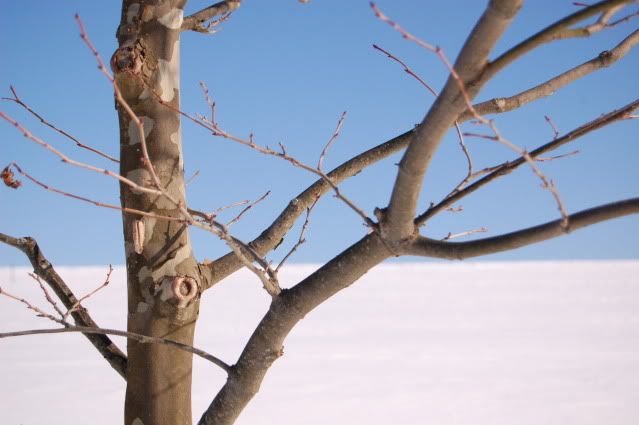
O Lord, I cannot plead my love of Thee:
I plead Thy love of me; --
The shallow conduit hails the unfathomed sea.
(Christina Rossetti)
-

-
O Lord, I cannot plead my love of Thee:
I plead Thy love of me; --
The shallow conduit hails the unfathomed sea.
(Christina Rossetti)
-
Tuesday, January 26, 2010
the river of your delights
-
How precious is your steadfast love, O God!
The children of mankind take refuge in the shadow of your wings.
They feast on the abundance of your house,
And you give them drink from the river of your delights.
For with you is the fountain of life;
In your light do we see light.
(Psalm 36:7-9, ESV)
-
How precious is your steadfast love, O God!
The children of mankind take refuge in the shadow of your wings.
They feast on the abundance of your house,
And you give them drink from the river of your delights.
For with you is the fountain of life;
In your light do we see light.
(Psalm 36:7-9, ESV)
-
Thursday, October 8, 2009
enjoyment overflows into praise
-
-
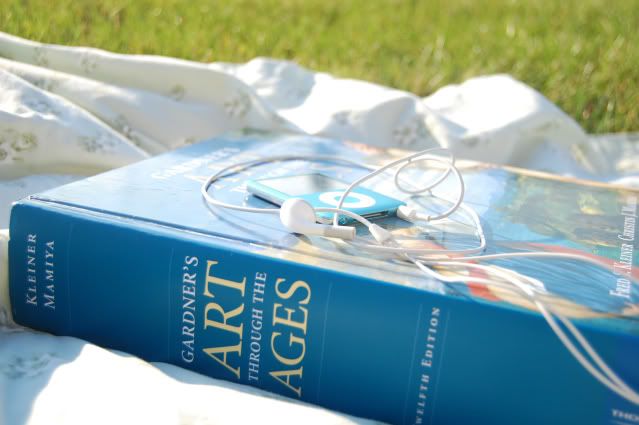
I spent a little while under the bright sun with my art history text the other day. It was beautiful--a little breezy, sunny, and green with the tint of autumn colors. Oh, how I adore some quiet, contemplative moments in the grass. The delight I felt made me think of this quote:
"But the most obvious fact about praise—whether of God or anything—strangely escaped me. I thought of it in terms of compliment, approval, or the giving of honor. I had never noticed that all enjoyment spontaneously overflows into praise...
The world rings with praise—lovers praising their mistresses, readers their favorite poet, walkers praising the countryside, players praising their favorite game...My whole, more general, difficulty about the praise of God depended on my absurdly denying to us, as regards the supremely Valuable, what we delight to do, what indeed we can't help doing, about everything else we value. I think we delight to praise what we enjoy because the praise not merely expresses but completes the enjoyment; it is its appointed consummation."
(C.S. Lewis, Reflections on the Psalms, 94-95)
Wednesday, October 7, 2009
clean water
---
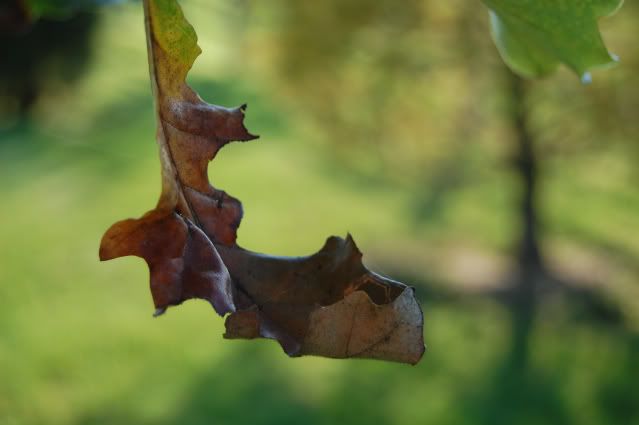
Today was the first day that I have actually been grateful it's fall. I've spent the past month lamenting the end of summer, but today something changed. Tea, scarves, and holiday celebrations are sounding lovely right now.
And these words have been on my mind tonight:
"I will sprinkle clean water on you, and you shall be clean from all your uncleanesses, and from all your idols I will cleanse you. And I will give you a new heart and a new spirit I will put within you. And I will remove the heart of stone from your flesh and give you a heart of flesh. And I will put my Spirit within you and cause you to walk in my statutes and be careful to obey my rules. You shall dwell in the land that I gave to your fathers, and you shall be my people, and I will be your God."
grace & peace,
Jessina
-
Tuesday, October 6, 2009
my soul thirsts
-
As a deer pants for flowing streams, so pants my soul for you, O God.
My soul thirsts for God,
for the living God.
When shall I come and see the face of God?
...By day the Lord commands his steadfast love
and at night his song is with me,
a prayer to the God of my life.
-
Subscribe to:
Posts (Atom)